Launch offer — valid today only

📄 Digital book in PDF · read it on your phone or print it

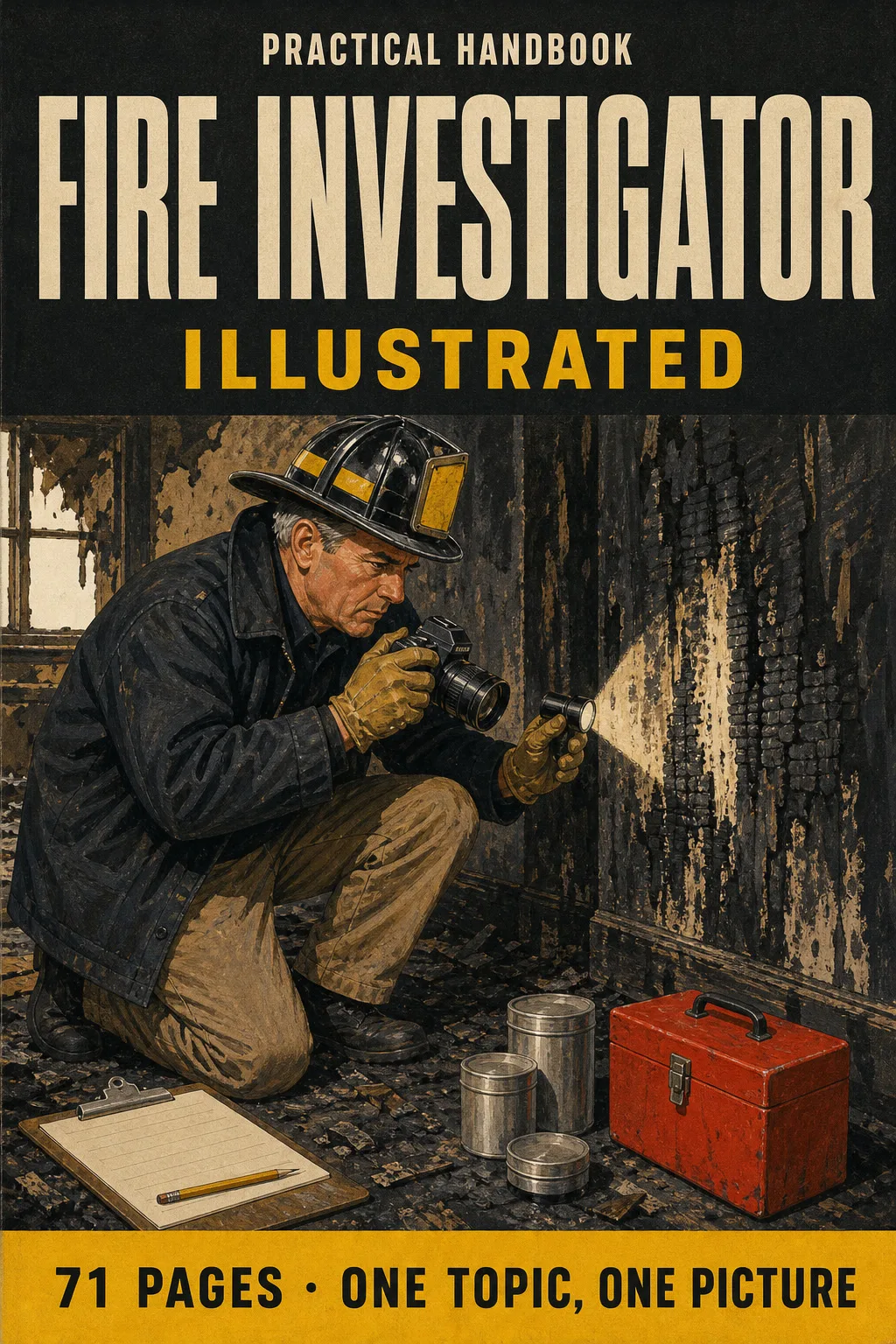
Fire Investigator Certification: Origin and Cause in Drawings The Same Order at Every Scene

Scene safety, fire dynamics, V patterns, char depth, calcination, arc mapping, ignition sources, evidence and chain of custody, the O&C report. Each topic gets its own page: the drawing first, then what you need to remember. 71 illustrated pages.

YES, I WANT THE 71 ILLUSTRATED PAGES

🔒 Secure checkout · PDF by email · 30-day guarantee
Every topic, its own pageEach fire pattern and each step drawn, with the explanation right beside it
71 illustrated pages71 illustrated pages in 8 parts, from method to testimony
Up-to-date sourcesNFPA 921 (2024) and NFPA 1033 (2022)
PDF by emailFormat

Look Inside the Book

Each page has one big drawing and a box with the steps and numbers you need to know:

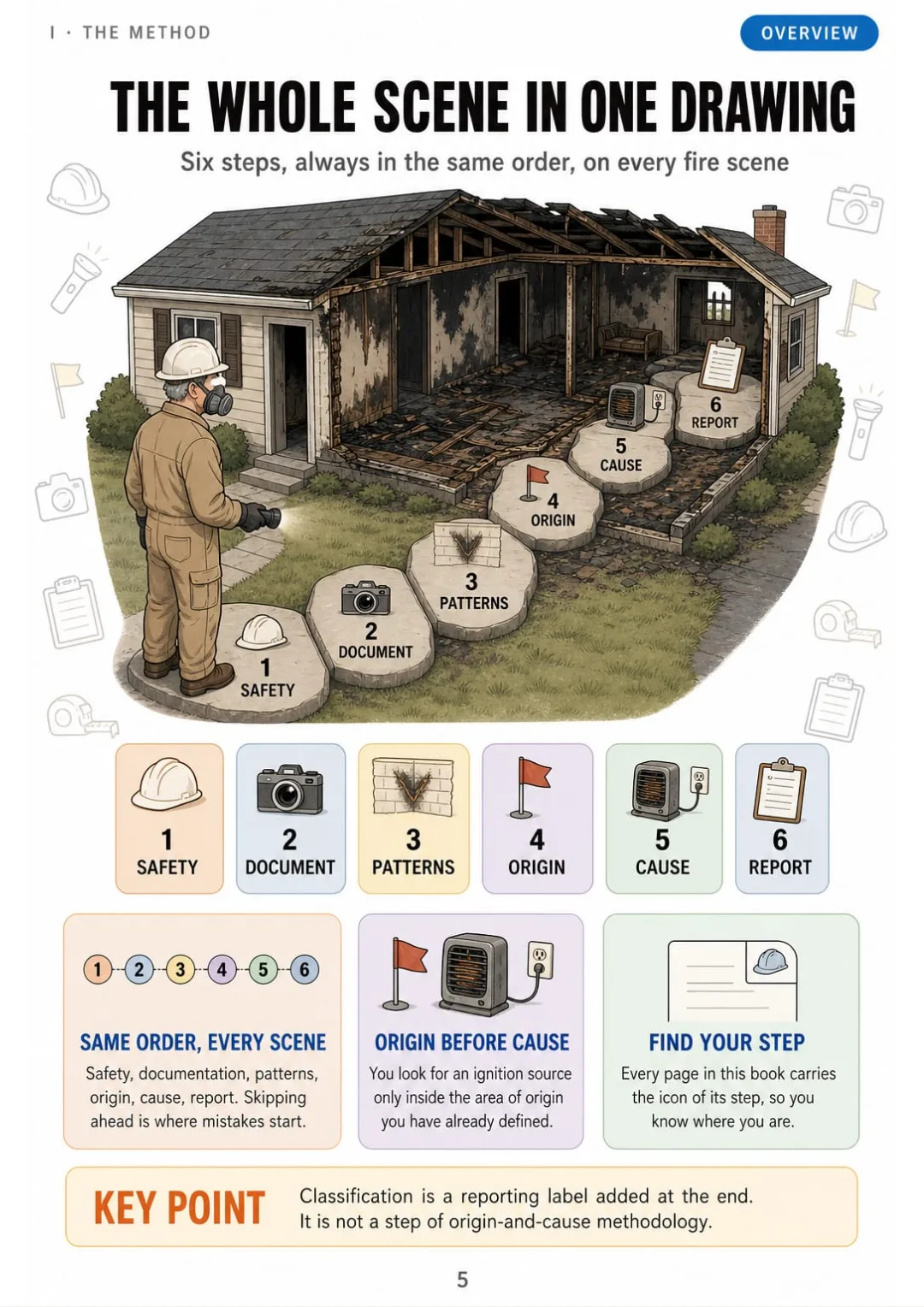
Safety → document → patterns → origin → cause → report: the order the whole book follows.
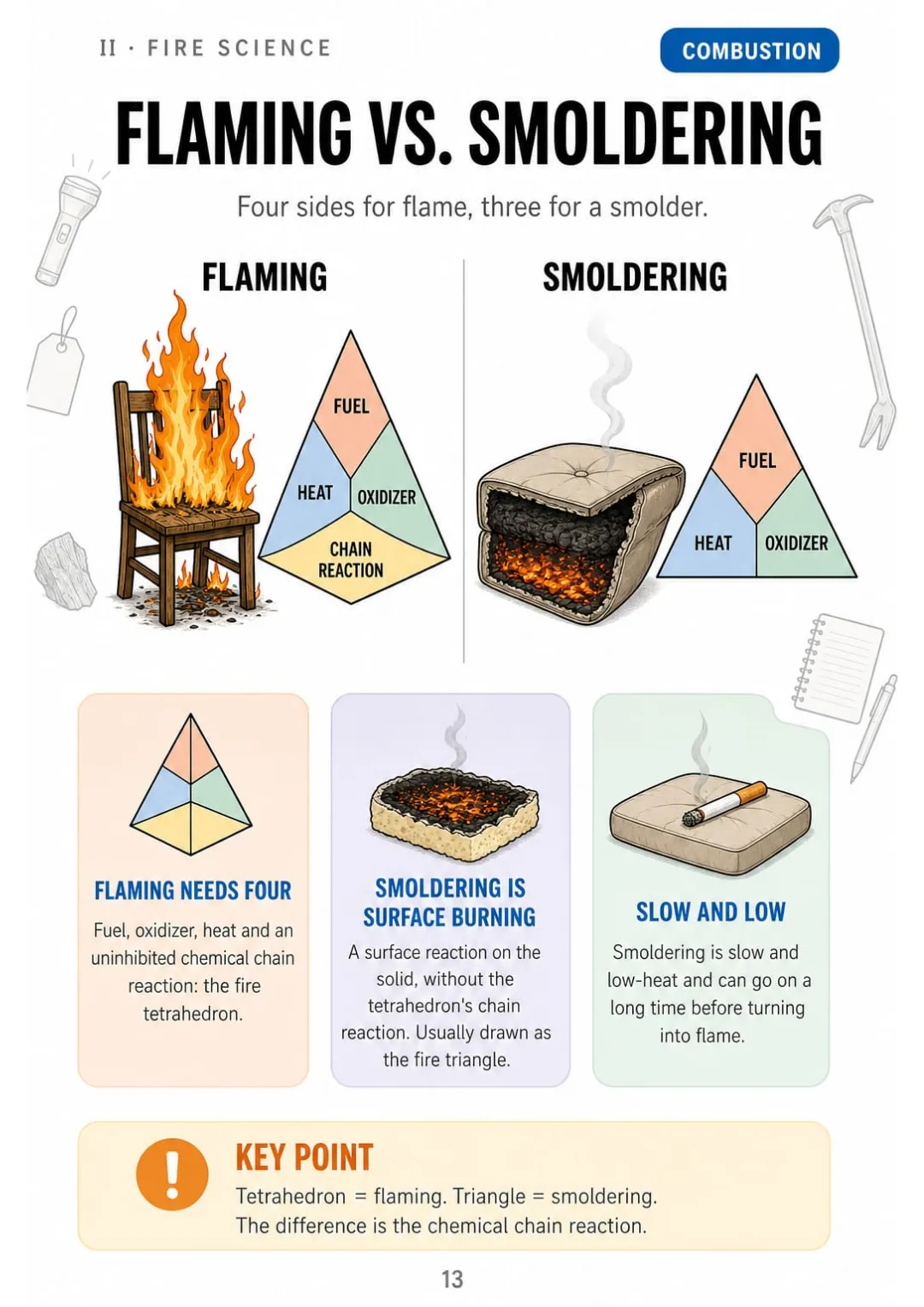
Flaming combustion: tetrahedron with chain reaction. Smoldering: surface reaction, fire triangle.
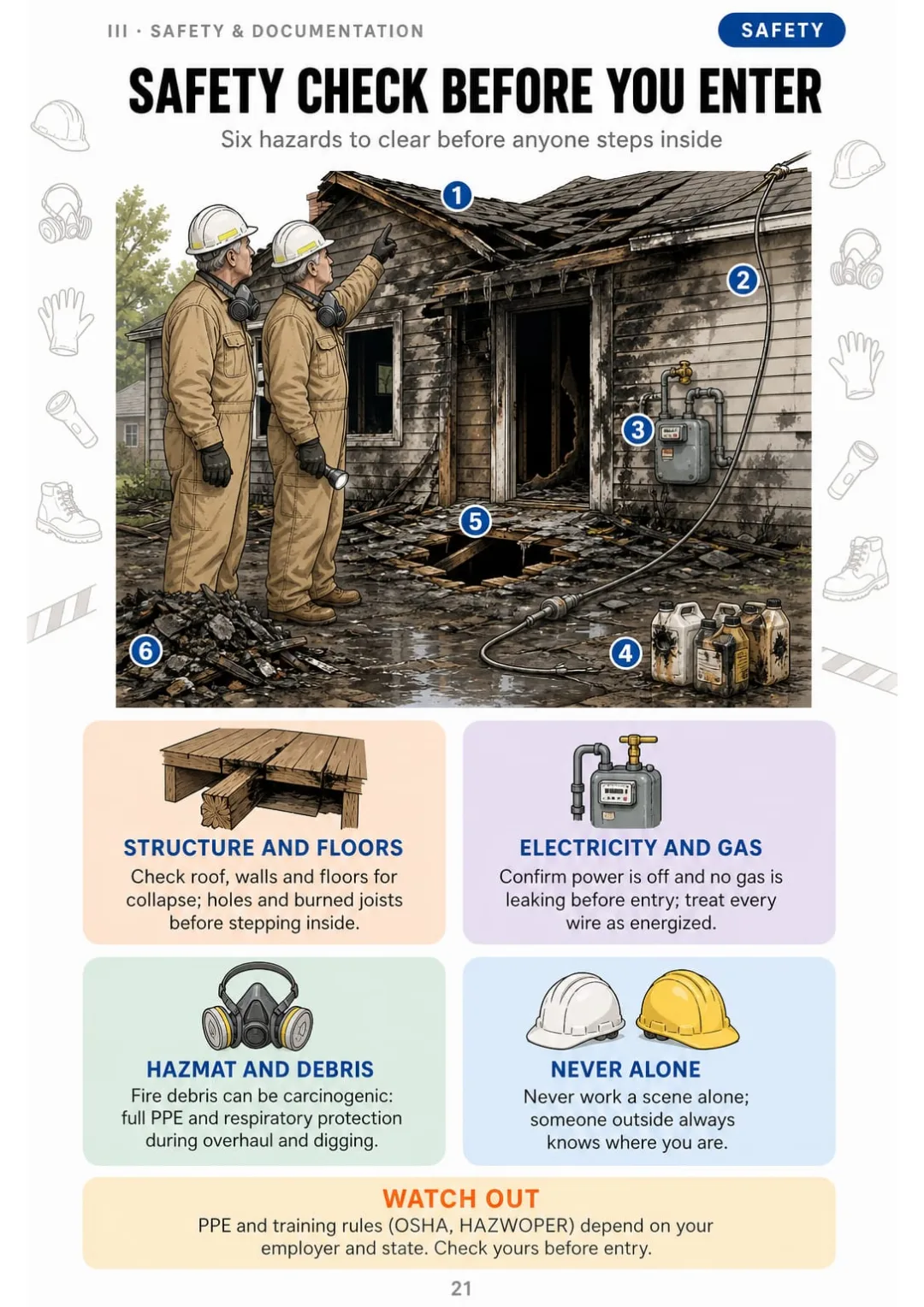
Structure, power, gas, hazmat, floor holes, toxic debris: checked before entry, never alone.
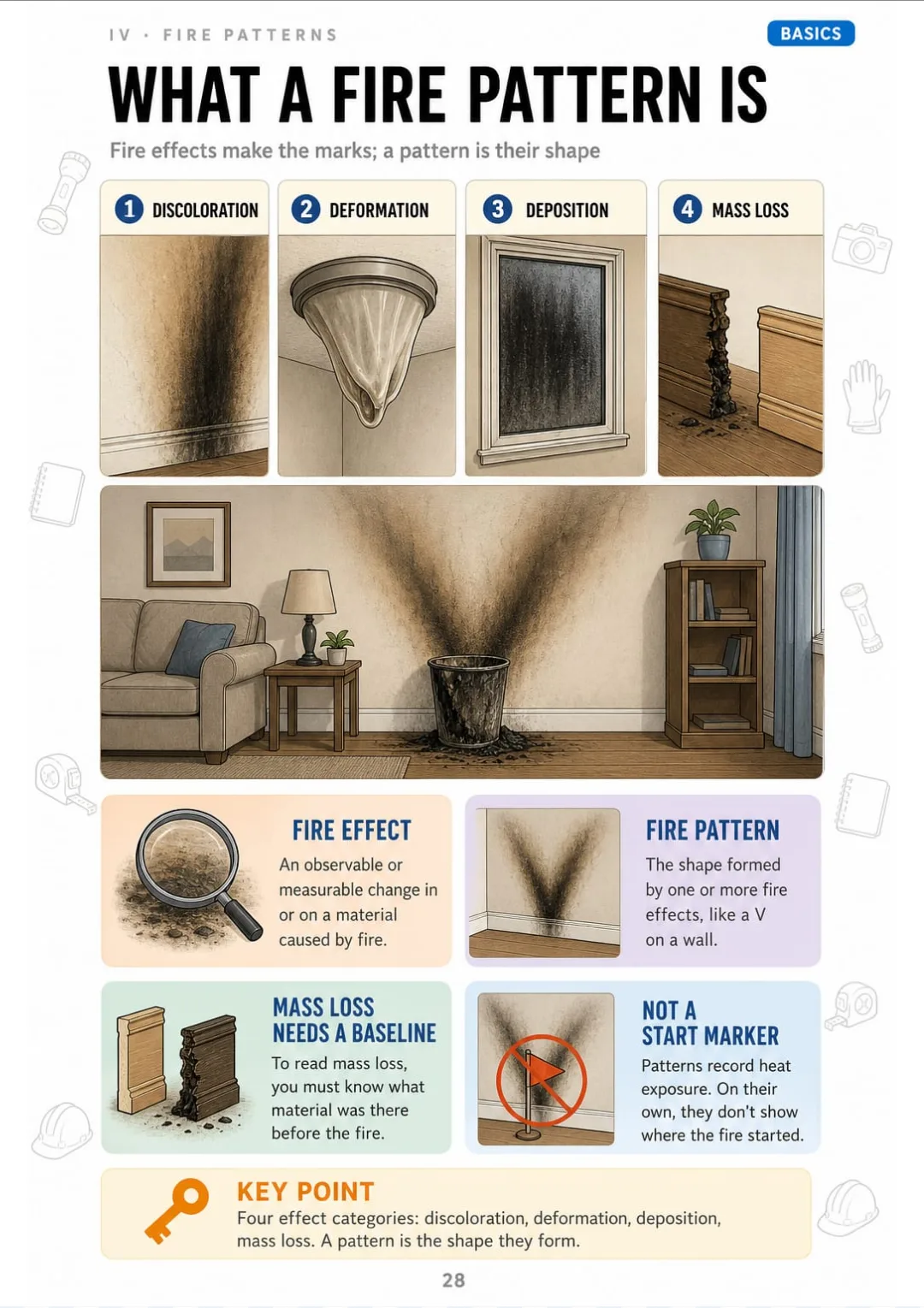
Discoloration, deformation, deposition, mass loss: the four fire effects behind every pattern (NFPA 921, 2024).
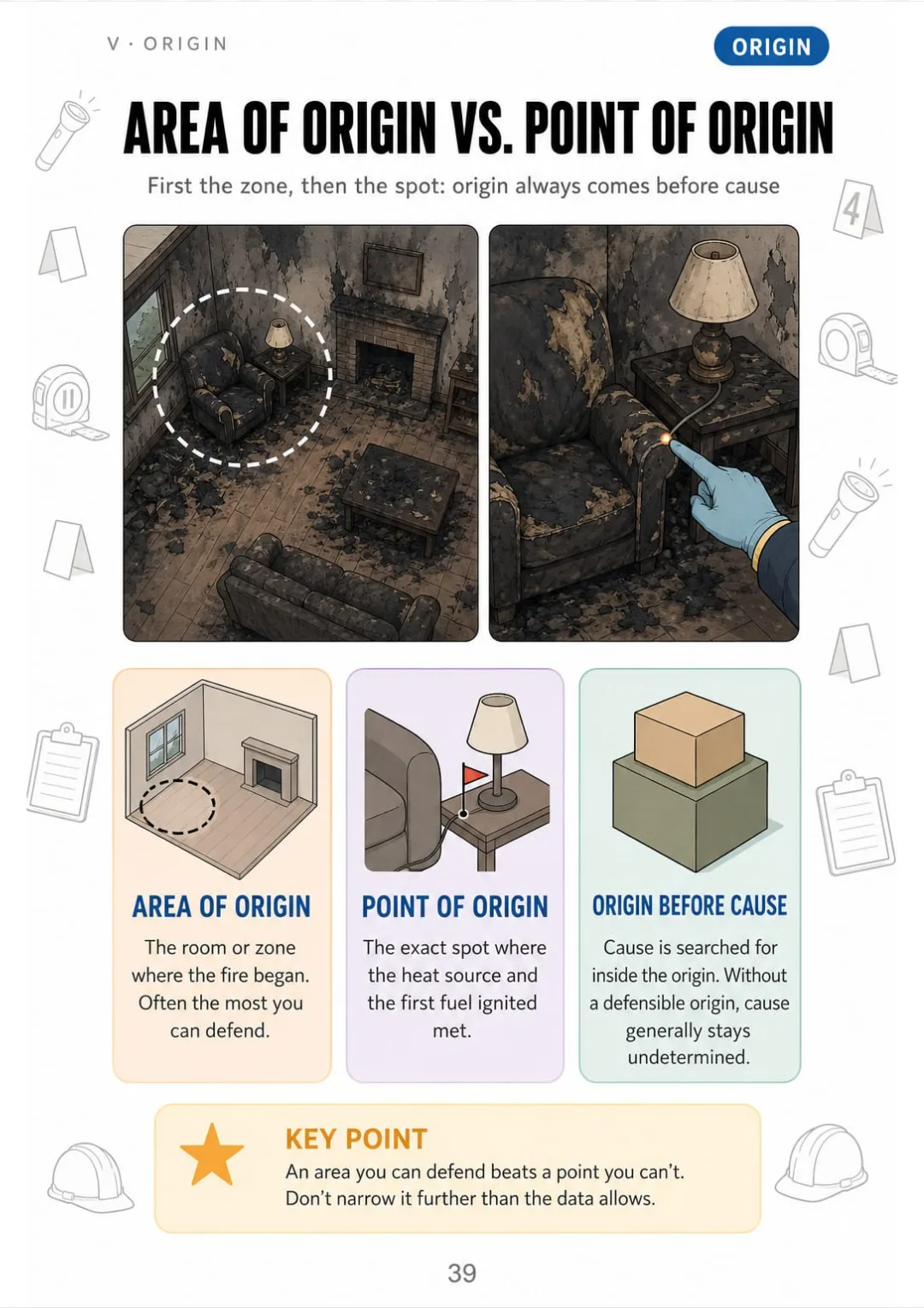
Area = the zone. Point = where heat met the first fuel. No origin, no cause.
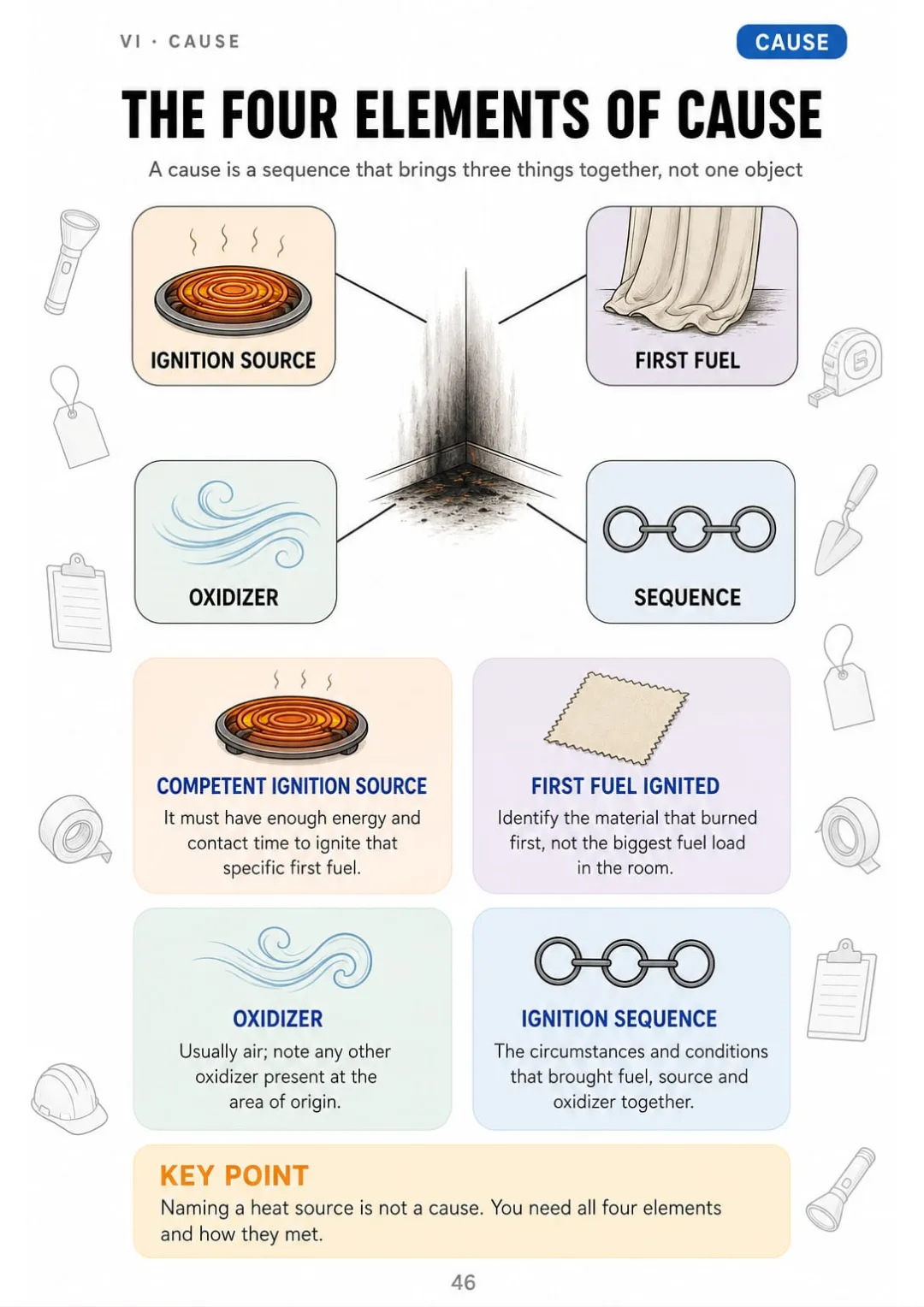
Ignition source, first fuel, oxidizer and ignition sequence: the four elements per NFPA 921, Chapter 19.
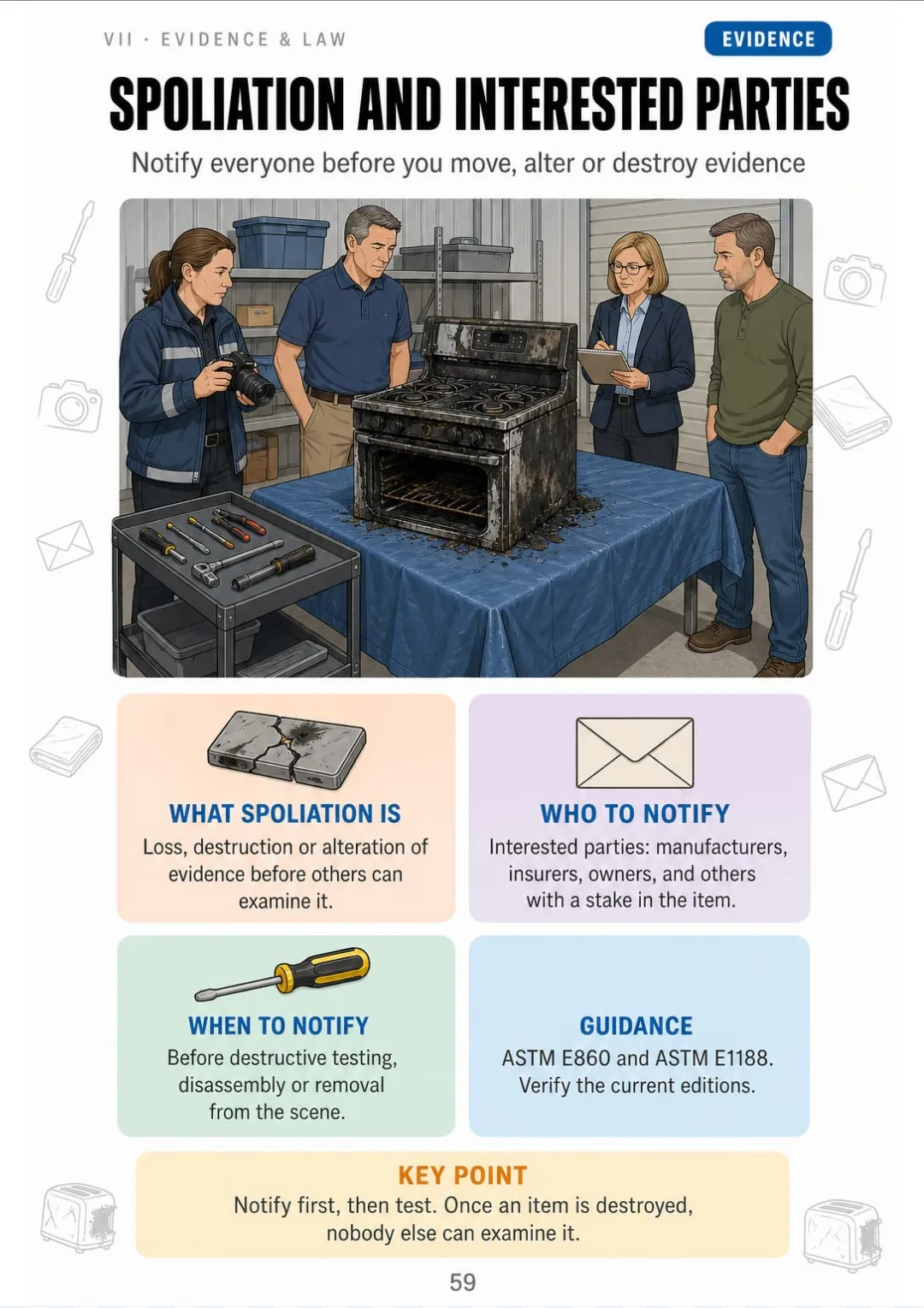
Spoliation: evidence lost or altered before others examine it. Notify per ASTM E860/E1188
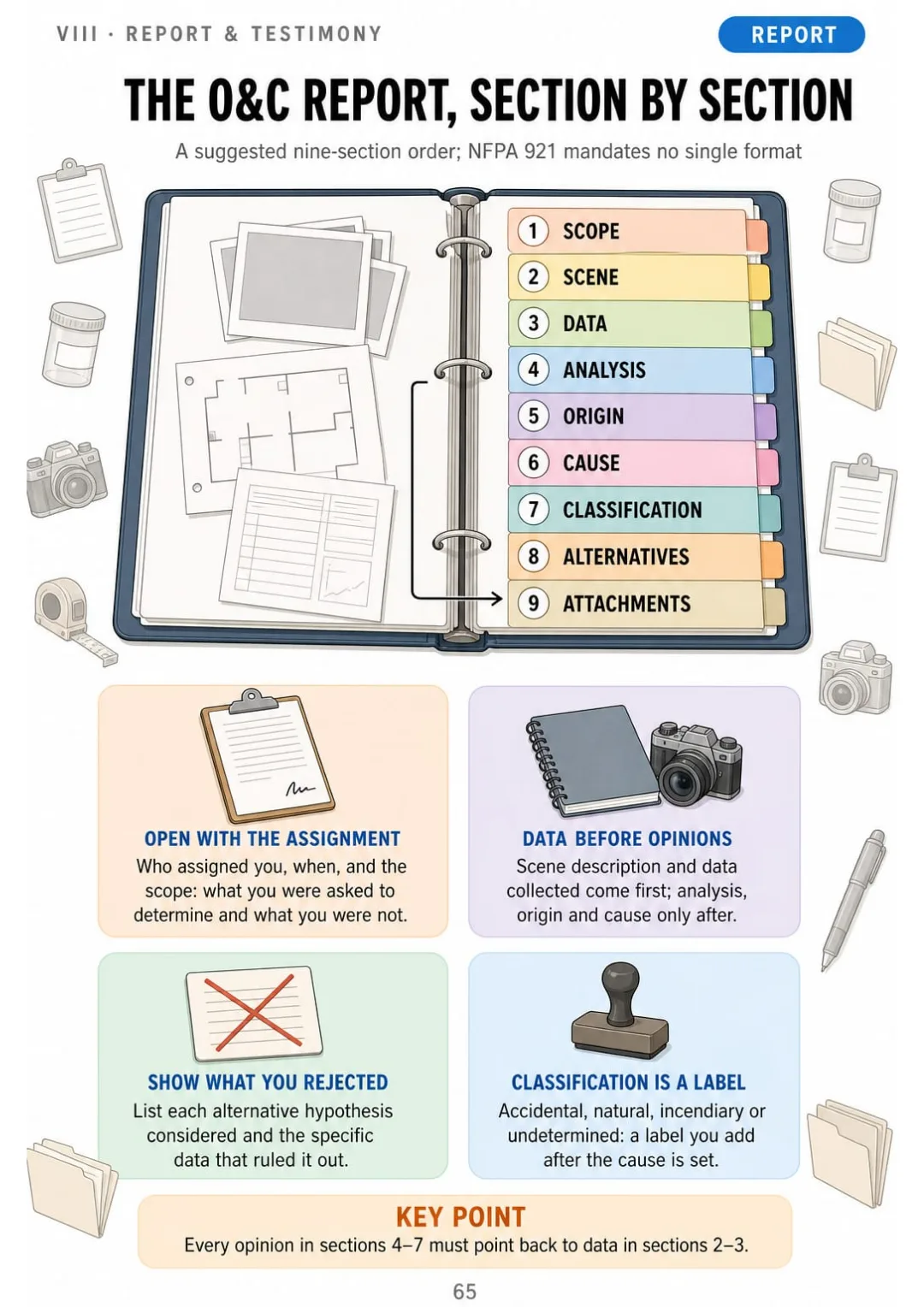
9 sections in order: scope, scene, data, analysis, origin, cause, classification, alternatives, attachments.

Swipe to see more →

These are real pages from the book. The table of contents is the full one: 8 parts and 67 topics.

The Problem Isn't You. It's How It Was Explained to You.

You're standing at the tape line of a two-story house that burned last night. The engine company has cleared, and you have to decide whether it's safe to go in.

You read the safety chapter. But it's paragraphs: structural stability in one place, utilities in another, hazardous materials further on. Standing in the driveway, you can't line them up.

Structure, power, gas, hazmat, floor holes, toxic debris: checked before entry, never alone.

In the book, that check is one page: the house drawn from the curb, with structure, power, gas, hazmat, floor holes and toxic debris marked in order, and a box that says it plainly: never alone.

The same goes for flaming vs. smoldering, the four fire effects behind every pattern, area vs. point of origin, the four elements of cause and how to package an ignitable liquid sample. Each one has its own page.

You see the page, you run the check, and you walk in knowing what you've ruled out, without going back to the manual.

COMPARE FOR YOURSELF

Same Topic, Two Ways to Study It

THIS
  • The manual: line after line
  • Combustion modes explained only in words
  • Tetrahedron or triangle? You reread the paragraph to find out
Combustion may proceed in two principal modes. Flaming combustion involves gas-phase oxidation of pyrolyzed or vaporized fuel and is represented by the fire tetrahedron, which adds the uninhibited chemical chain reaction to fuel, heat and oxidizing agent. Smoldering combustion, by contrast, is a heterogeneous surface oxidation reaction occurring on the solid fuel itself, typically in porous materials, at lower temperatures and lower heat release rates, and is therefore described by the fire triangle. Transition from smoldering to flaming may occur under conditions of increased oxygen availability.
FOR THIS
  • Flaming vs. smoldering in one drawing
  • The tetrahedron and the triangle in a box
  • Smoldering: no flame, no chain reaction, so it's the triangle
Flaming combustion: tetrahedron with chain reaction. Smoldering: surface reaction, fire triangle.
CONTENTS

Take a Look at the 8 Parts and 67 Topics

The job and the method, fire science, safety and documentation, fire patterns, origin, cause, evidence and the law, and the report and testimony: 71 pages, all illustrated

IThe Job and the Method · pp. 5-12
  1. The Whole Scene in One Drawing
  2. NFPA 921 vs. NFPA 1033
  3. The 16 Knowledge Topics of NFPA 1033
  4. The Scientific Method in Seven Steps
  5. Inductive vs. Deductive Reasoning
  6. Testing a Hypothesis
  7. Expectation Bias and Confirmation Bias
  8. The Four Cause Classifications and Levels of Certainty
IIFire Science · pp. 13-20
  1. Fire Tetrahedron: Flaming vs. Smoldering
  2. Heat Transfer: Conduction, Convection, Radiation
  3. Thermometry: What a Melted Material Tells You
  4. Flash Point, Fire Point, Autoignition
  5. Heat Release Rate
  6. Plume, Ceiling Jet and Hot Gas Layer
  7. Fire Stages and Flashover
  8. Fuel-Controlled vs. Ventilation-Controlled
IIISafety and Scene Documentation · pp. 21-27
  1. Scene Safety Assessment
  2. Legal Entry: Consent, Exigency, Warrant
  3. Exterior to Interior, Least to Most Damage
  4. Photography: Overall → Midrange → Close-Up
  5. Sketches and Diagrams
  6. Notes and Witness Interviews
  7. Building Systems and Fire Protection
IVFire Patterns · pp. 28-38
  1. What a Fire Pattern Is
  2. The V Pattern and What Its Angle Means
  3. Inverted V, Hourglass, U and Truncated Cone
  4. Pointer and Arrow, Circular, Saddle Burns
  5. Clean Burn vs. Area of Origin
  6. Char Depth Survey
  7. Calcination of Gypsum Wallboard
  8. Spalling of Concrete
  9. Glass: Crazing and Fracture Lines
  10. Irregular Floor Patterns After Flashover
  11. Protected Areas and Furniture Springs
VDetermining the Origin · pp. 39-45
  1. Area of Origin vs. Point of Origin
  2. The Four Data Sources for Origin
  3. Heat and Flame Vector Analysis
  4. Arc Mapping
  5. Electronic and Timeline Data
  6. Debris Layering and Scene Reconstruction
  7. Testing the Origin Hypothesis
VIDetermining the Cause · pp. 46-55
  1. The Four Elements of Cause
  2. Eliminating Ignition Sources the Right Way
  3. Electricity Basics for Investigators
  4. Arc Beads vs. Melted Conductors
  5. Resistance Heating and Poor Connections
  6. Appliances and Cooking
  7. Smoking Materials and Open Flames
  8. Spontaneous Heating
  9. Fuel Gases: Natural Gas vs. Propane
  10. Natural Causes: Lightning and Sunlight
VIIEvidence, Special Scenes and the Law · pp. 56-64
  1. Collecting Ignitable Liquid Samples
  2. Ignitable Liquid Detection Canines
  3. Chain of Custody and Labeling
  4. Spoliation and Interested Parties
  5. Fire Fatalities
  6. Incendiary Indicators and Motive
  7. Vehicle Fires
  8. Wildland Fire Indicators
  9. Explosions: Seated vs. Nonseated
VIIIReport, Testimony and Review · pp. 65-71
  1. Structure of an Origin and Cause Report
  2. Writing a Conclusion That Holds Up
  3. Daubert, Frye and Rule 702
  4. Deposition and Cross-Examination
  5. The One-Page Scene Checklist
  6. Pairs That Are Often Confused
  7. Mapping NFPA 1033 to This Book

One Page, One Topic, All Clear

Think of it this way:

You're in the kitchen of a burned house. The V pattern on the wall points one way, the char depth on the cabinets points another, and you have to commit to an area of origin.

In the book you open the page on V patterns: the angle drawn next to the ventilation pattern it's often confused with, and when each one points to origin and when it doesn't.

Area = the zone. Point = where heat met the first fuel. No origin, no cause.

The same with char depth, calcination, arc mapping, the four elements of cause and chain of custody: each one on its own page.

Fire Investigator Illustrated is 8 parts and 67 topics, all drawn, and it closes with a one-page scene checklist and the pairs most often confused.

What you see drawn, you don't have to memorize.

What's Inside Fire Investigator Illustrated:

Ipp. 5-12

The Job and the Method

What the investigator does, NFPA 921 vs. NFPA 1033, the scientific method in seven steps, bias and the four cause classifications.

IIpp. 13-20

Fire Science

The fire tetrahedron, heat transfer, flash point and autoignition, heat release rate, the plume, flashover and ventilation-controlled fires.

IIIpp. 21-27

Safety and Scene Documentation

Scene safety, legal entry, working from least to most damage, photography, sketches, notes, interviews and building systems.

IVpp. 28-38

Fire Patterns

Read a wall before you trust it: what a pattern is, V and its variants, clean burn vs. origin, char depth, calcination, spalling, glass and protected areas.

Vpp. 39-45

Determining the Origin

Commit to an origin you can defend: area vs. point, the four data sources, heat and flame vectors, arc mapping, debris layering and testing the hypothesis.

VIpp. 46-55

Determining the Cause

The four elements of cause, eliminating sources the right way, electrical evidence, appliances, smoking, spontaneous heating, fuel gases and natural causes.

VIIpp. 56-64

Evidence, Special Scenes and the Law

Ignitable liquid samples, canines, chain of custody, spoliation, fatalities, incendiary indicators, vehicles, wildland and explosions.

VIIIpp. 65-71

Report, Testimony and Review

The O&C report section by section, conclusions that hold up, Daubert and Rule 702, cross-examination and a one-page scene checklist.

At the end of the book: A one-page scene checklist, the pairs most often confused and NFPA 1033 mapped to the book.

Plus: 2 Free Books

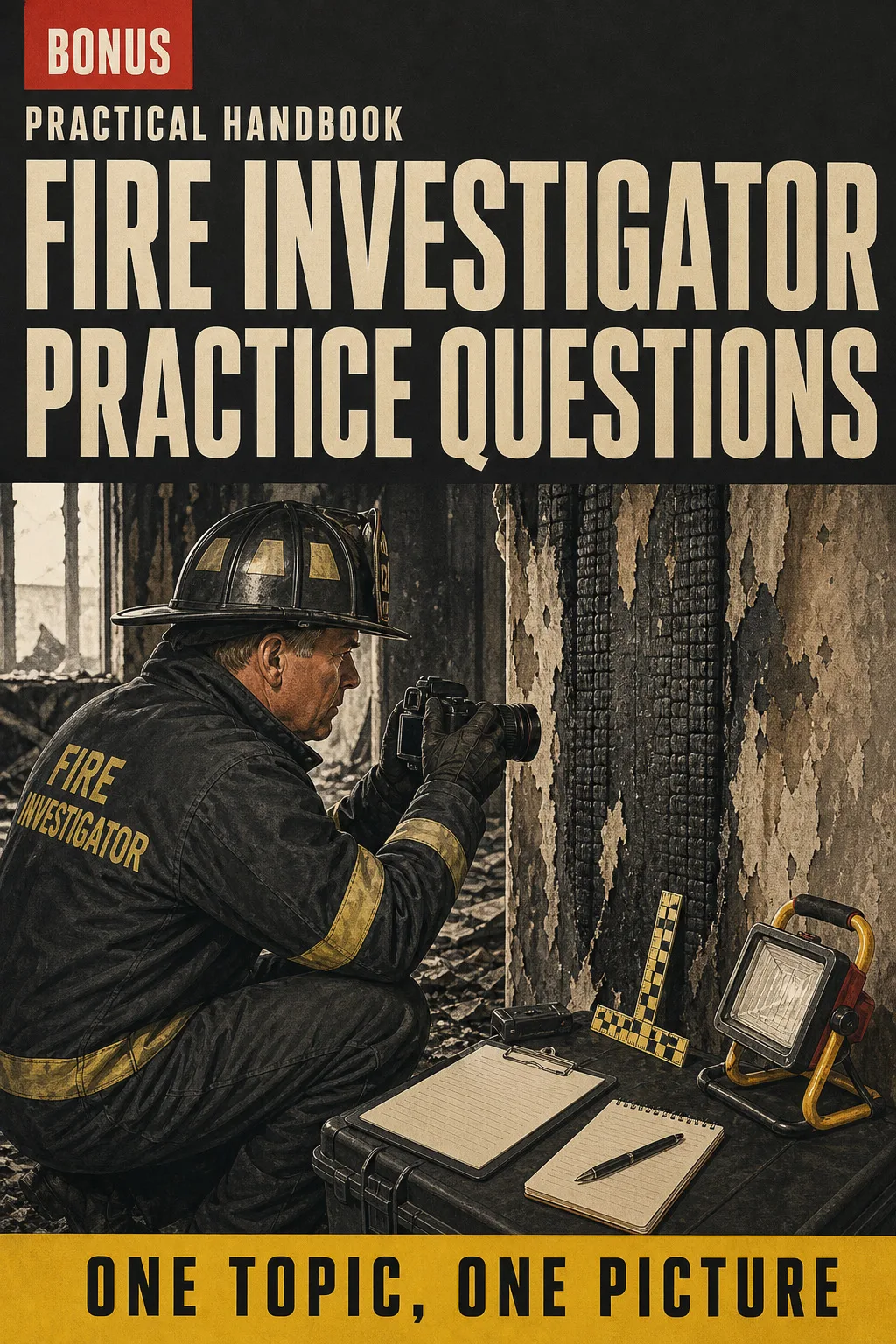
Fire Investigator Practice Questions

BONUS 1: «Fire Investigator Practice Questions»

Value on its own: US$ 17.90

Exam-style questions on origin, cause, patterns and evidence, each with the answer explained, so you can check what you know before the test.

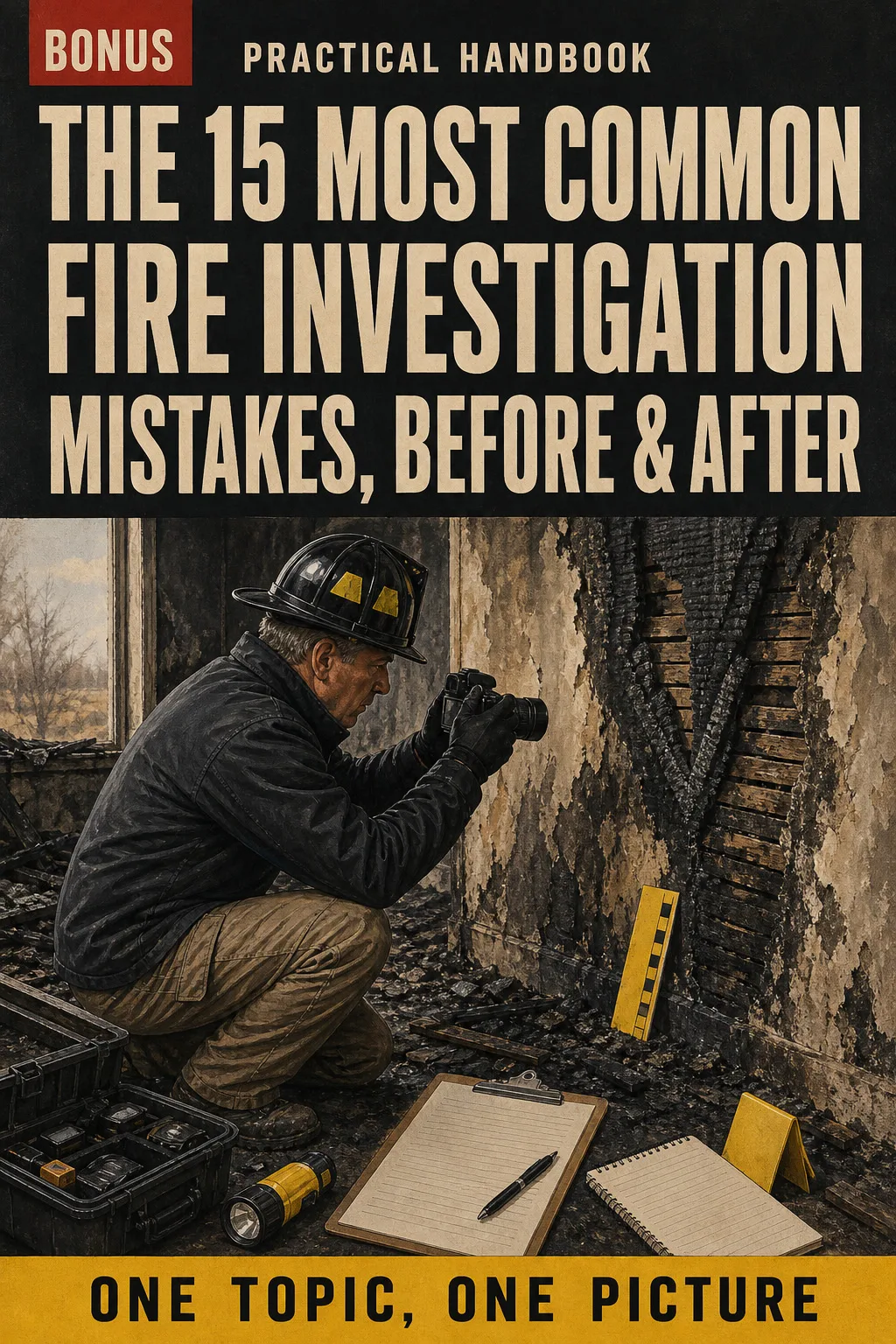
The 15 Most Common Fire Investigation Mistakes, Before & After

BONUS 2: «The 15 Most Common Fire Investigation Mistakes, Before & After»

Value on its own: US$ 14.90

The most frequent errors on scene and in the report, each drawn wrong and then right, so you catch them before an examiner or an attorney does.

Fire Investigator Illustrated with 2 Free Books

  • Fire Investigator Illustrated: 71 illustrated pagesUS$ 63
  • BONUS 1: Fire Investigator Practice QuestionsUS$ 17.90
  • BONUS 2: The 15 Most Common Fire Investigation Mistakes, Before & AfterUS$ 14.90
  • High-resolution PDF to printIncluded
Total value US$ 95.80
YOUR PRICE:
US$ 27
You save US$ 68.80
YES, I WANT FIRE INVESTIGATOR ILLUSTRATED FOR US$ 27

📄 This is a digital PDF book sent to your email: nothing is printed or shipped.

Secure purchaseEncrypted payment30-day guarantee

PDF by email: We email you Fire Investigator Illustrated as a PDF, together with the two free books. It's a single payment: no installments, no extra charges.

Who This Book Is For

You're studying for certification

You're studying for certification

Each NFPA 1033 topic on its own drawn page, in the order you'll work a scene. You review it in pieces, between shifts.

Your exam date is set

Your exam date is set

The pairs that get mixed up, side by side, and the practice questions to check what you know before test day.

You already work fire scenes or claims

You already work fire scenes or claims

A printed reference for the truck or the file: patterns, origin, cause and the report, the same order every time.

Everything You Get Today

US$ 95.80US$ 27
YES, I WANT FIRE INVESTIGATOR ILLUSTRATED FOR US$ 27

📄 This is a digital PDF book sent to your email: nothing is printed or shipped.

30DAYS
GUARANTEE

30-Day Guarantee

Try Fire Investigator Illustrated for 30 days, bonus books included.

We refund everything if the file won't open, if the book isn't what you see here, if you were charged twice or if the email doesn't arrive. Just email us.

You pay once. No subscriptions.

Frequently Asked Questions

Is it for me if I've been in the fire service for years?

Yes. It doesn't teach you fire from scratch: it puts what you know in the order NFPA 921 asks for, one drawn page per topic. Parts 5 to 8 cover what suppression rarely teaches: arc mapping, eliminating ignition sources, spoliation, Daubert and cross-examination.

Where does the content come from?

It's checked against NFPA 921 (2024 edition) and NFPA 1033 (2022 edition), the standards behind US fire investigator certifications such as IAAI-CFI, NAFI-CFEI and Pro Board or IFSAC Fire Investigator. Each section reference is listed so you can check it in your own copy of the current edition.

Is this official material?

No. It's independent study material. It isn't published, approved or endorsed by NFPA, IAAI, NAFI, the Pro Board or IFSAC, and it doesn't give you a certificate or continuing-education hours.

Does it replace my course or NFPA 921?

No. It's a visual companion for studying and reviewing. Your course, field training, the current NFPA 921 and your own professional judgment come first.

Are the practice questions the ones on the exam?

No. They're written for this book, in exam style, to check what you know. They aren't questions from any official exam.

When and how do I get it?

The book and the 2 bonus books arrive as PDFs by email, at the address you enter at checkout.

Do I have to pay every month?

No. It's a one-time payment. No subscription.

Can I have it on paper?

Yes. The PDF is made to print: print the whole book or just the pages you want to keep at the station or in your truck.

How does the refund work?

You have 30 days. We refund everything if the file won't open, if the book isn't what you see on this page, if you were charged twice or if the email doesn't arrive: just email us.

Before You Close This Page

No more rereading NFPA 921 with nothing sticking.

V patterns, char depth and calcination: you see them drawn, and that's it.

You walk into the exam knowing where everything is.

Drawings make studying faster.

The book is right below.

One-time payment: US$ 27 · Guarantee: 30 days · PDF by email

YES, I WANT FIRE INVESTIGATOR ILLUSTRATED FOR US$ 27

📄 This is a digital PDF book sent to your email: nothing is printed or shipped.